Cat Tree Tower: Condo, Hammock, Perch & Scratching Posts
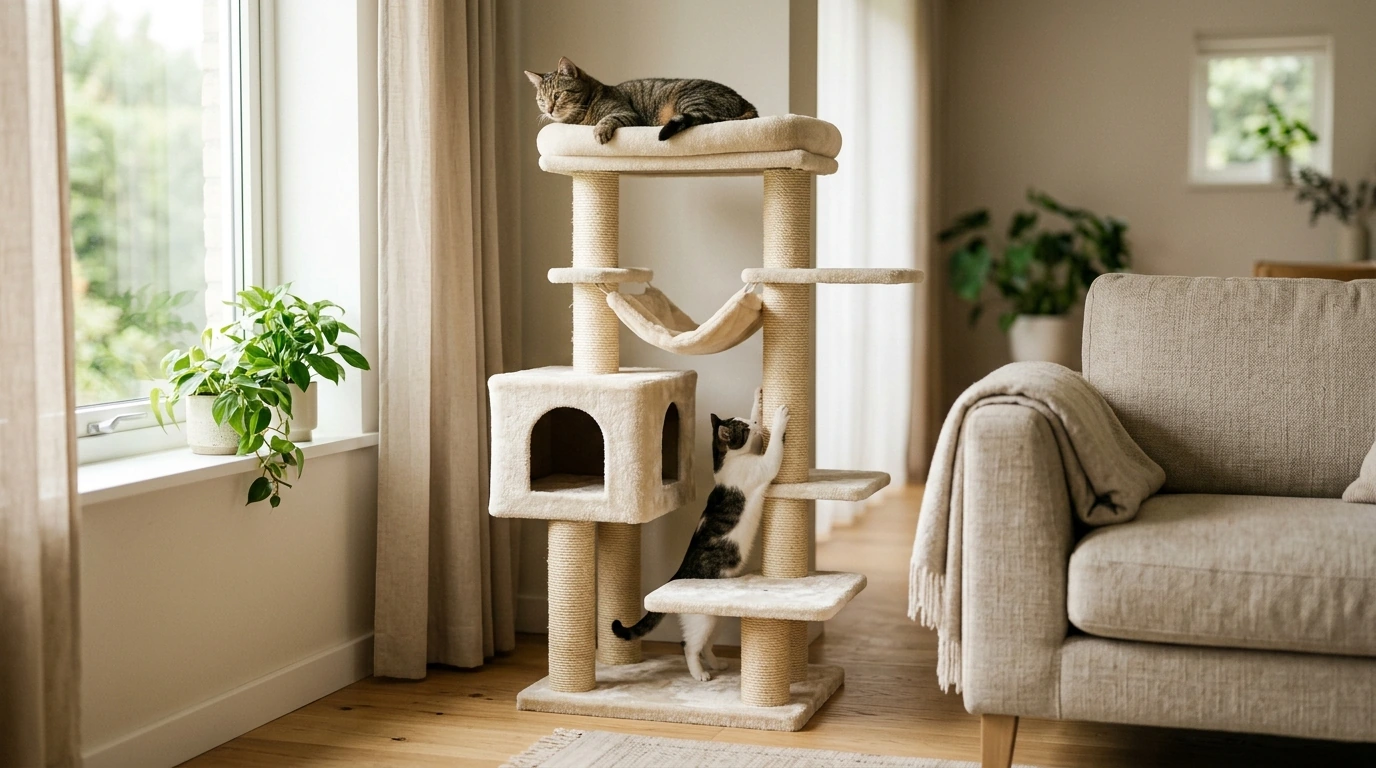
Multi-Level Cat Tree Tower with Scratching Posts, Cat Condo, Hammock & Top Perch
A well-designed cat tree can turn a small corner of a room into a complete feline zone for climbing, scratching, lounging, and watching the household from above. This multi-level tower combines vertical play with cozy rest spots, helping cats burn energy, feel secure, and keep claws busy on scratching posts instead of furniture. For indoor cats especially, adding vertical territory is a simple upgrade that supports daily movement, calmer downtime, and healthier scratching habits.
What this tower adds to a cat’s daily routine
Cats thrive on choice—where to perch, where to nap, and where to scratch. A multi-level setup creates a mini “apartment” that supports natural behaviors without taking over your floor space.
- Vertical territory encourages natural climbing and confidence-building movement, especially for indoor cats.
- Multiple rest zones (condo + hammock + top perch) support quick switches between play and recovery.
- Scratching posts provide a dedicated place for claw maintenance and scent-marking behaviors.
- Elevated perches can reduce stress by giving cats a predictable lookout point away from foot traffic.
- Multi-cat homes benefit from stacked “levels” that help create space without expanding floor footprint.
For more ideas on keeping indoor cats engaged, resources from Humane Society of the United States and International Cat Care offer helpful enrichment guidance.
Key features at a glance
- Multi-level layout: creates separate zones for play, rest, and observation.
- Scratching posts: encourages healthy scratching habits and helps protect carpets/sofas.
- Enclosed cat condo: offers a hideaway for naps and decompression time.
- Hammock-style lounger: supports curled-up sleeping and mid-level lounging.
- Top perch: gives a high vantage point for monitoring windows, doors, and household activity.
Feature-to-benefit guide
| Component | Best for | Why it matters |
|---|---|---|
| Scratching posts | Daily claw care | Helps redirect scratching to a dedicated surface and supports stretching |
| Cat condo | Privacy naps | Creates a sheltered spot that can feel safer for shy or new cats |
| Hammock | Relaxed lounging | Supports curled sleeping and gives a soft mid-level rest zone |
| Multiple platforms | Play circuits | Lets cats hop, climb, and rest without leaving the tower |
| Top perch | Lookout time | Elevated views can reduce stress and increase engagement with the environment |
Where it fits best in the home
Placement affects how much your cat actually uses the tower. The goal is a spot that feels safe, offers interest, and doesn’t compete with less pleasant areas (like the litter box zone).
- Near a window: the top perch becomes a bird-watching station; consider indirect sun to avoid overheating.
- In a social area: placing it in the living room can prevent cats from feeling isolated during rest times.
- Away from litter boxes: keeps resting zones separate from bathroom areas.
- Against a wall or in a corner: improves stability and gives cats a secure “backstop” when climbing.
- Clear landing space: leave open floor space around the base for safe jumps and zoomies.
Comfort and safety checks to make it cat-approved
- Stability first: ensure the base sits flat; tighten all hardware after assembly and re-check periodically.
- Right-height confidence: encourage timid cats by placing treats on lower platforms first, then gradually higher.
- Claw-friendly surfaces: reward use of scratching posts; consider catnip or silvervine if your cat responds to it.
- Senior and kitten considerations: add a small step stool nearby if your cat prefers shorter jumps.
- Multi-cat harmony: if one cat tends to guard the top, add another resting spot elsewhere to reduce conflict.
General cat care guidance (including stress reduction and healthy routines) can be found through the ASPCA’s cat care resources.
Getting cats to use the condo, hammock, and perch
Some cats climb immediately; others need a few days of low-pressure encouragement. The best results come from making the new tower feel familiar and rewarding.
- Make it smell familiar: place a small blanket or item with the cat’s scent inside the condo for faster acceptance.
- Create positive associations: sprinkle treats on each level or feed a few kibbles near the base for a week.
- Play to guide exploration: use a wand toy to lead climbs up the platforms and end with a reward on the perch.
- Discourage furniture scratching: temporarily cover favorite furniture corners while rewarding scratching on the posts.
- Respect preferences: some cats prefer open perches, others prefer enclosed condos—keep all zones available.
Care and maintenance
When this type of tower is a strong match
Shop cat favorites
If you’re ready to add a dedicated climbing-and-lounging zone, start with the Multi-Level Cat Tree Tower with Scratching Posts, Cat Condo, Hammock & Top Perch. For cats that love an extra enclosed nap option on the floor (or a backup sleep spot in another room), pair it with the Cozy Honey Pot Cat Bed.
FAQ
How tall should a cat tree be for an adult cat?
Many adult cats enjoy height because it gives them a sense of security and a better view of their surroundings. Choose a height your cat can reach with confident jumps based on age and mobility, and place the tower near a wall or corner to help it feel stable.
How can a cat be trained to use the scratching posts instead of the sofa?
Put the tower close to the area where your cat currently scratches, then reward any interaction with the posts right away with treats or praise. Catnip can help, and temporarily covering or blocking the sofa corner makes the post the easiest, most satisfying option; regular nail trims can also reduce damage while the habit changes.
Is a condo or a hammock better for cat naps?
A condo is usually best for cats that prefer enclosed privacy, while a hammock suits cats that like open, relaxed lounging. Offering both lets your cat choose based on mood, temperature, and household activity.














Leave a comment